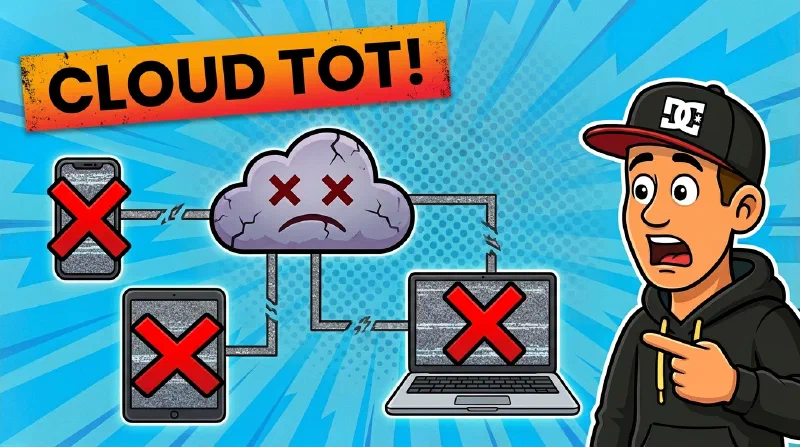
A video of mine that had barely attracted any attention for months suddenly jumped to over 16,000 views within a few days. I hadn’t changed anything. YouTube hadn’t pushed it. But on one specific day, someone in a corporate headquarters had pressed a button — and in doing so, switched off a piece of thousands of people’s smart homes.
Bose had shut down the cloud service for SoundTouch.
And people flooded my channel — angry, stunned, looking for answers.
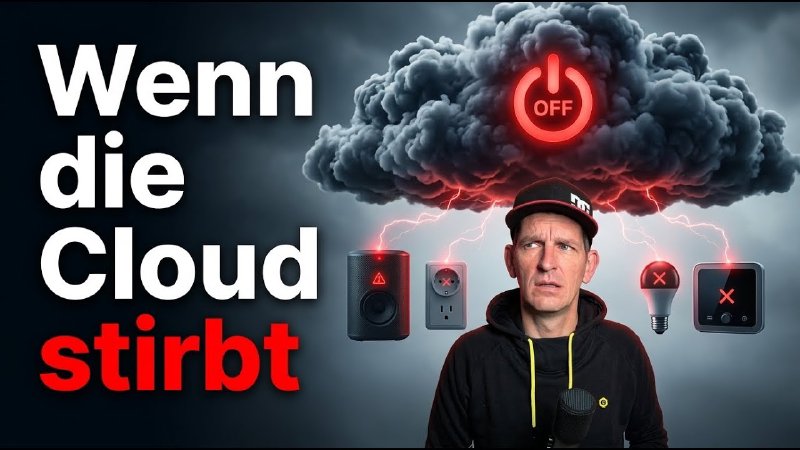
“I could just throw up”
The comments that poured in over the following days left a real impression on me. Not because they were so aggressive — but because they were so honest.
“Today it was over. Our SoundTouch is dead. Radio too. Never cloud devices again, never Bose again.”
“I could just throw up. I’ve had several speakers for over 10 years to listen to the radio, and now nothing works. Absolute disgrace.”
“6 speakers as multiroom setup. Mega scandal. Never Bose again.”
“This is criminal.”
None of these people had fundamentally done anything wrong. They bought expensive brand-name products, took care of them, and used them every single day for years. And then someone in a corporate headquarters decided: this isn’t worth it anymore. We’re shutting down the servers.
I don’t own a Bose SoundTouch myself. I watched the whole thing from the outside — as someone who had already made a video about exactly this risk. But I know the feeling anyway. From people around me. Over and over again. A friend who wakes up in the morning and his smart plugs no longer respond. An acquaintance whose heating control suddenly goes offline because the manufacturer “discontinued the cloud subscription.”
People who bought in good faith. And who bear no responsibility for what happened.
That’s exactly why I made this video. Not to bash Bose. But because the pattern keeps repeating.
This is not an isolated incident. It’s a pattern.
Bose wasn’t the first. And won’t be the last.
Insteon, April 2022: Overnight, without any warning, all servers shut down. Around 100,000 users wake up one morning: nothing works anymore. No cloud, no app, no support. The CEO was unreachable.
Wink, May 2020: Users were suddenly given a choice — pay a monthly fee or accept shutdown. Less than a week’s notice. The packaging had explicitly stated: no subscription fees.
Belkin WeMo, January 2026: Announced in July 2025, shut down in January 2026. All devices affected, regardless of age. Only after public pressure was a partial refund offered.
The pattern is always the same: buy a device. Use it for years. One day an email arrives. Or maybe nothing at all. And suddenly it’s over.
In the video I show you how to spot these time bombs — before you buy, not after.
My own blind spot
I’ve been sensitive to this issue for a long time. My entire smart home runs locally — no external server, no cloud dependency. Switching to Home Assistant was the moment I understood that I genuinely wanted to be in control of my smart home.
But honestly, I still have a blind spot: my Shark robot vacuum.
It runs on the Shark cloud. And I know exactly what that means. At some point an app update, a server shutdown, or a corporate acquisition could cause my Home Assistant integration to simply stop working. I know this. And I haven’t changed it yet.
That’s my deliberate compromise. And that’s the difference: you can use cloud devices. But you should know that you’re doing so.
Whether your devices are at risk — and how to find out quickly — is what I explain in the video.
What’s really at stake
The Bose story didn’t affect me because of the technology. And not because of the money.
It’s about trust.
The trust that a product will work tomorrow just as it does today. That I can tell a friend, three years from now, whose smart home setup I helped build: that still works. You’re in control of that.
That trust is the foundation of every smart home. And it’s more fragile than most people think.
In the video I show you four concrete questions to identify risky devices — and three steps you can take starting today to protect yourself.
Further reading
Which cloud has already died on you? Write it in the comments — I’m genuinely curious about your story.
Note: Links marked with affiliate link are affiliate links. As a partner of various retailers and manufacturers (e.g. Amazon, OBI via the Awin network, Shelly) I earn from qualifying purchases. This means I receive a small commission if you purchase through these links — at no extra cost to you. The revenue helps me run this blog and YouTube channel and keep creating content. Thank you for your support!
― Joachim